

Radiation is a natural and man - made phenomenon that exists in various forms, such as alpha particles, beta particles, gamma rays, and X - rays. With the increasing use of radiation in medical, industrial, and research fields, the need for effective radiation protection has become crucial. Lead glass, a specialized type of glass with a high lead content, has emerged as a popular choice for radiation shielding. As a lead glass supplier, I have witnessed firsthand the importance and effectiveness of lead glass in interacting with radiation. In this blog, I will delve into how lead glass interacts with radiation and why it is a reliable solution for radiation protection.
The Composition of Lead Glass
Lead glass is primarily composed of silica (SiO₂), which forms the basic glass structure, and lead oxide (PbO). The addition of lead oxide significantly alters the properties of the glass, making it dense and capable of absorbing radiation. The percentage of lead oxide in lead glass can vary, typically ranging from 20% to 60%. Higher lead oxide content generally results in better radiation shielding capabilities.
Interaction Mechanisms with Different Types of Radiation
Alpha Particles
Alpha particles are relatively large and heavy, consisting of two protons and two neutrons. They have a positive charge and a low penetration power. When alpha particles encounter lead glass, they interact with the electrons and nuclei of the atoms in the glass. Due to their large size and charge, alpha particles can easily transfer their energy to the atoms in the lead glass through ionization and excitation processes. As a result, alpha particles are quickly stopped within a very short distance in lead glass. In most cases, even a thin layer of lead glass can effectively block alpha particles.
Beta Particles
Beta particles are either electrons (beta - minus) or positrons (beta - plus). They are much smaller and lighter than alpha particles and have a higher penetration power. When beta particles pass through lead glass, they interact with the atoms in the glass in several ways. One of the main interaction mechanisms is ionization, where beta particles knock electrons out of the atoms in the lead glass. Additionally, beta particles can also undergo Bremsstrahlung radiation, which is the emission of electromagnetic radiation when a charged particle is decelerated by the electric field of an atomic nucleus. The lead glass absorbs both the kinetic energy of the beta particles and the Bremsstrahlung radiation. However, for high - energy beta particles, additional shielding may be required in combination with lead glass to ensure complete protection.

Gamma Rays and X - Rays
Gamma rays and X - rays are high - energy electromagnetic radiation. They have no mass or charge and a very high penetration power. The interaction of gamma rays and X - rays with lead glass is more complex and involves three main processes: the photoelectric effect, Compton scattering, and pair production.
The photoelectric effect occurs when a gamma ray or X - ray photon transfers all of its energy to an electron in an atom of the lead glass, ejecting the electron from the atom. This process is most likely to happen for low - energy photons. Compton scattering takes place when a photon collides with an electron in the lead glass, transferring part of its energy to the electron and changing its direction. This process is more significant for intermediate - energy photons. Pair production occurs when a high - energy photon interacts with the electric field of a nucleus in the lead glass and is converted into an electron - positron pair.
The high lead content in lead glass makes it an excellent absorber of gamma rays and X - rays. The lead atoms have a large number of electrons and a high atomic number, which increases the probability of the above - mentioned interaction processes. As a result, lead glass can effectively reduce the intensity of gamma rays and X - rays passing through it.
Advantages of Using Lead Glass for Radiation Shielding
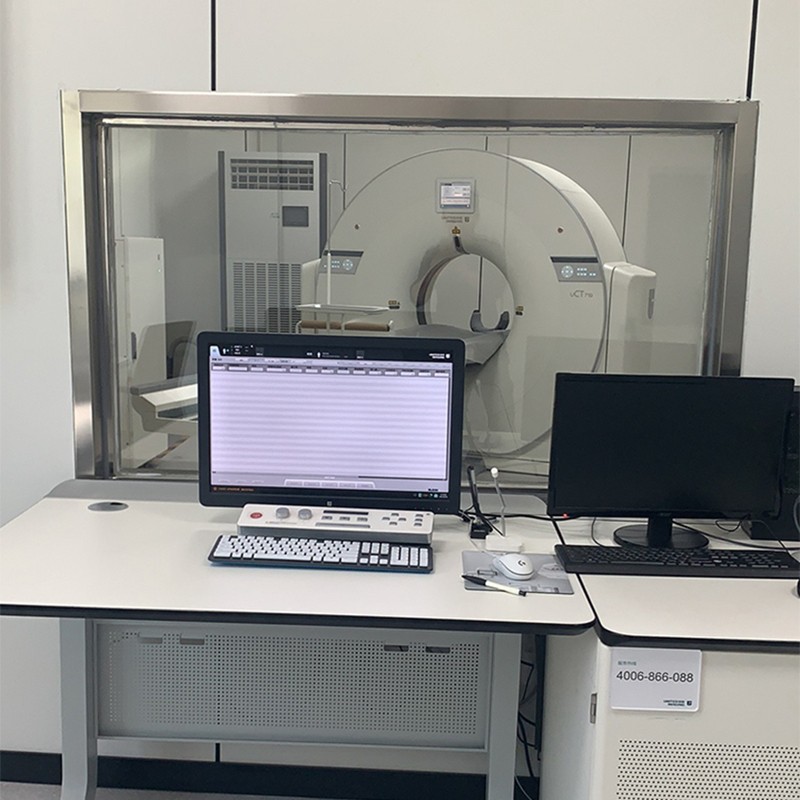
- Transparency: One of the significant advantages of lead glass is its transparency. In applications such as medical imaging rooms (e.g., X - ray and CT scan rooms), it is essential to have a clear view of the patient or the equipment. Lead glass allows for visual monitoring while providing effective radiation shielding. You can learn more about the transparency and shielding capabilities of X - Ray Lead Glass.
- Versatility: Lead glass can be fabricated into various shapes and sizes to meet different application requirements. It can be used in windows, doors, partitions, and viewing ports. For example, Radiation Protection Lead Glass can be customized to fit specific radiation protection needs in different industries.
- Durability: Lead glass is a durable material that can withstand normal wear and tear. It has good chemical resistance and mechanical strength, ensuring a long - service life in radiation - exposed environments.
Factors Affecting the Radiation Shielding Performance of Lead Glass
- Lead Content: As mentioned earlier, the lead content in lead glass is a crucial factor in determining its radiation shielding performance. Higher lead content generally leads to better shielding capabilities. For example, Lead Glass 3mmpb with a certain lead equivalent thickness provides a specific level of radiation protection.
- Thickness: The thickness of the lead glass also plays an important role. A thicker layer of lead glass can absorb more radiation. However, the relationship between thickness and shielding effectiveness is not always linear, especially for high - energy radiation.
- Energy of Radiation: Different types and energies of radiation interact with lead glass in different ways. High - energy radiation requires more shielding than low - energy radiation. Therefore, the energy spectrum of the radiation source must be considered when selecting lead glass for shielding.
Applications of Lead Glass in Radiation Protection
- Medical Field: In hospitals and clinics, lead glass is widely used in X - ray rooms, CT scan rooms, and nuclear medicine departments. It is installed in windows and partitions to protect medical staff and patients from unnecessary radiation exposure while allowing for visual monitoring during procedures.
- Industrial Field: Industries that use radiation sources, such as non - destructive testing facilities and nuclear power plants, also rely on lead glass for radiation shielding. It is used in viewing ports and control rooms to ensure the safety of workers.
- Research Field: In research laboratories where radiation experiments are conducted, lead glass is used to protect researchers and the surrounding environment from radiation.
Conclusion
Lead glass is a highly effective material for radiation shielding due to its unique composition and interaction mechanisms with different types of radiation. Its transparency, versatility, and durability make it a popular choice in various industries where radiation protection is required. As a lead glass supplier, we are committed to providing high - quality lead glass products that meet the strictest radiation protection standards.
If you are in need of lead glass for radiation protection in your facility, we invite you to contact us for a detailed consultation and to discuss your specific requirements. Our team of experts will be happy to assist you in selecting the most suitable lead glass products for your application.
References
- Knoll, Glenn F. Radiation Detection and Measurement. 4th ed., Wiley, 2010.
- Turner, J. E. Atoms, Radiation, and Radiation Protection. 3rd ed., Wiley, 2007.